As heard on The Kansas City Weather Report Podcast
We are thrilled to be featured on The Kansas City Weather Report Podcast, hosted by meteorologist Wes Peery. New episodes are uploaded every Monday – Friday, and includes important information regarding upcoming weather systems in and around the Kansas City area to keep you informed, safe, and ready to take on the day! Whether you’re heading to work, taking the dog for a walk, mowing the lawn, attending a sporting event, enjoying a family outing, or simply spending time outdoors, knowing what the weather and allergy conditions may look like can help you plan ahead.
Weather doesn’t just determine what you wear or what activities you plan, it can also influence the allergens around you. Understanding the connection between the daily forecast and pollen and mold conditions can help you make informed decisions about your day.
From windy mornings and changing temperatures to rainy afternoons and humid summer days, weather conditions can affect how allergens behave in the environment. By paying attention to both the forecast and allergy conditions, you can better prepare for the days when symptoms may be more likely to interfere with your plans.
Weather and Allergies: How they interact and affect one another
Pollen-weather connection
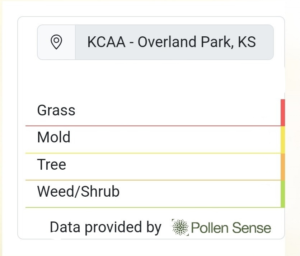
Airborne pollen is the number one cause of seasonal allergies, which affects more than 80 million Americans annually. Weather affects the dispersion and density of pollen in the air at any given time, which is why accurate pollen predictions are very beneficial for allergy symptom sufferers and indicates when adjustments to outdoor activities, medications, and precautions are necessary.
Weather events such as rain, for example, tends to lower pollen counts and improve allergy symptoms. However, high humidity has been shown to rupture pollen particles into smaller pieces, making them easier to inhale and cause symptoms. All combinations of weather conditions have a different effect on pollens and molds, leading to difficulty in planning outdoor activities. Knowing what pollens and molds you are sensitive to, the concentration in the air, and how it will affect you is where we come in.
A weather forecast can provide more than information about temperature and precipitation. For allergy sufferers, conditions such as wind, humidity, rainfall, temperature, and changing weather patterns can all be important pieces of the puzzle.
Wind can move pollen through the air and increase the opportunity for exposure. Humidity and moisture can influence mold growth and the behavior of certain allergens. Rain can temporarily remove some pollen from the air, while the conditions that follow a storm may create a different environment for pollen and mold.
This is why looking at the weather and pollen forecast together can provide a more complete picture of what to expect.
Stay ahead of the weather AND your allergies.
Check the forecast. Know your allergens. Plan your day.
Whether you’re enjoying Kansas City’s changing seasons or simply trying to get through allergy season comfortably, The Kansas City Weather Report and our team at Kansas City Allergy and Asthma are here to help you stay informed.
Weather changes. Allergies change. Your plans don’t always have to.